The engineering student community is currently in a state of shock following alarming reports. Specifically, claims suggesting the JEE Advanced 2026 Result Portal Hacked have surfaced online, raising massive concerns about data privacy. These allegations, brought to light by a young cybersecurity researcher, suggest that the sensitive information of lakhs of candidates might be compromised. In this article, we will dive deep into the details of these claims, the role of researcher Rylen Anil, and what this means for the students awaiting their admissions.
The Origin of the JEE Advanced 2026 Result Portal Hacked Claims
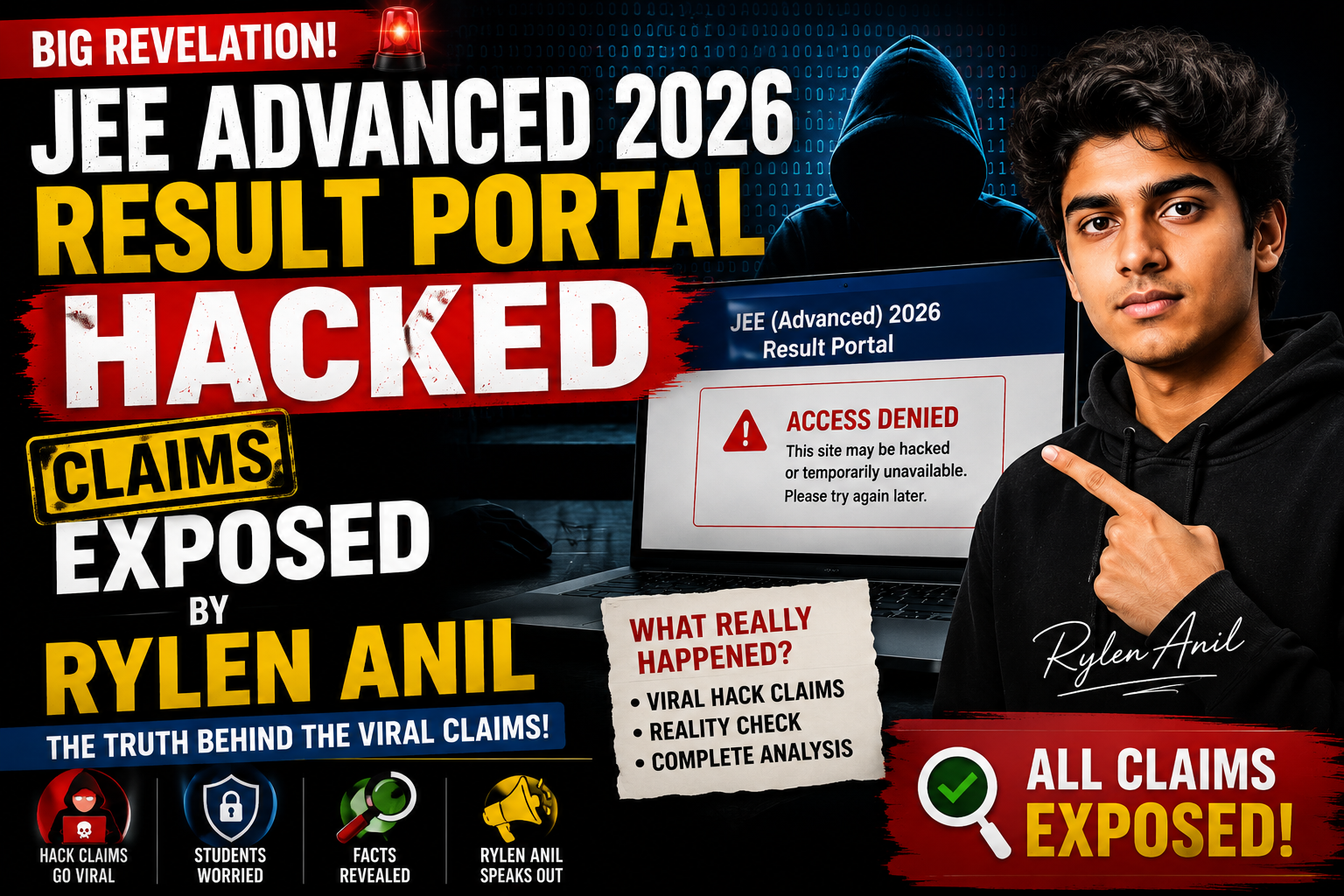
The controversy began shortly after the official declaration of the JEE Advanced results. Rumors started circulating on social media platforms, particularly Reddit and X (formerly Twitter), that the JEE Advanced 2026 Result Portal Hacked. However, the nature of this “hack” is quite specific. According to initial reports, it was not a traditional malicious attack where hackers break through firewalls. Instead, it appears to be a case of severe data exposure due to misconfigured cloud storage.
Rylen Anil Exposes the Vulnerability
The spotlight quickly turned to Rylen Anil, a Dubai-based teenage cybersecurity researcher. Anil, who previously highlighted vulnerabilities in the CBSE OSM system and the NTA re-examination portal, brought attention to this new issue . He alleged that the portal contained critical flaws, including a “superadmin login bypass.” Furthermore, discussions on forums like Reddit indicated that a Google Cloud Storage bucket was mistakenly set to public . Consequently, this misconfiguration allegedly allowed anyone to download files containing sensitive candidate data.
What Data Was Allegedly Exposed?
If the JEE Advanced 2026 Result Portal Hacked claims regarding data exposure are accurate, the implications are severe. Reports suggest that the exposed data could include:
•Candidate Names
•Roll Numbers
•Dates of Birth
•Registered Phone Numbers
•Detailed Scorecards and Ranks
This level of data exposure is a massive privacy violation. Therefore, students are understandably panicked about the potential misuse of their personal information for phishing scams or identity theft.
Understanding the Difference: Hack vs. Data Exposure
It is crucial to clarify the technical terms being used. While the public is calling it the JEE Advanced 2026 Result Portal Hacked, cybersecurity experts describe it as a “data exposure” or “data leak.” A hack usually implies a forced entry by a malicious actor. In contrast, data exposure happens when administrators fail to secure their databases properly, leaving them open to the public internet. Regardless of the terminology, the end result for the students is the same: their private data is no longer private.
The Official Response to the Claims
As of now, the official bodies responsible for the JEE Advanced examination, including IIT Roorkee, have not released a comprehensive public statement confirming or denying the extent of the data leak. However, given the gravity of Rylen Anil’s claims and the widespread panic, an official clarification is urgently needed. Students and parents are demanding transparency and immediate action to secure the remaining data.
How Students Can Protect Themselves
While the authorities investigate the JEE Advanced 2026 Result Portal Hacked allegations, students must take proactive steps to protect themselves. Here are some essential safety measures:
1.Beware of Phishing: Be extremely cautious of unsolicited emails, SMS, or phone calls asking for personal details or offering “admission help” based on your leaked rank.
2.Change Passwords: Immediately change the passwords for your email accounts and any other portals where you used the same credentials.
3.Monitor Accounts: Keep a close eye on your bank accounts and digital identities for any suspicious activities.
4.Rely on Official Sources: Do not trust unverified links circulating on social media. Always visit the official jeeadv.ac.in website for authentic updates.
Conclusion
The claims that the JEE Advanced 2026 Result Portal Hacked have cast a dark shadow over what should be a celebratory time for successful candidates. The vulnerabilities exposed by Rylen Anil highlight a desperate need for stronger cybersecurity measures in India’s educational infrastructure. Until the authorities provide a clear explanation and secure the systems, students must remain vigilant. We will continue to monitor this situation and provide updates as more information becomes available.
References
[2] JEE ADVANCED 2026 Result Site hacked. Reddit.
Alos read: NTA Re-Exam Portal Hacked? Data Leak Alert